Air Conditioner Installation in Austin, TX
Air conditioner replacement and new system installation across Austin and nearby areas.
A new system installation and a system replacement are often called the same job, but we separate them from the hallway before we plan the work. When supply registers, a thermostat, and an existing indoor air handler are already in place, we are usually looking at a replacement. When there is no duct path, condenser location, refrigerant line route, or electrical connection for cooling equipment, we are planning a new installation.
We handle both situations across Austin, Rollingwood, West Lake Hills, and Lost Creek. For a replacement, we match the outdoor condenser, indoor coil or air handler, thermostat, line set, drain connection, and existing ductwork to the house. For a new system, we work through the equipment locations, return-air path, supply ducts, pad or wall bracket, disconnect, and condensate drain before equipment is selected.
A planned installation can be scheduled around remodeling or a home addition, but a replacement for a failed air conditioner should not be put off. A non-operating condenser leaves the house without cooling, while an improperly matched replacement can create airflow, drainage, and electrical problems that are harder to correct after the equipment is set.
Outdoor unit will not start
We hear several different descriptions that can lead to an installation call: the outdoor unit hums but the fan does not spin, the vents blow warm air while the thermostat is set to cool, the condenser clicks repeatedly and shuts down, or a burning smell comes from the air handler or electrical disconnect. We also check systems that run for long stretches without lowering the room temperature, especially when the equipment is aging or the compressor has stopped starting reliably.
Those symptoms do not all point to the same component. A capacitor, contactor, blower motor, compressor, refrigerant leak, restricted return, or damaged coil can produce similar results from inside the house, yet each involves different parts and a different scope of work. We inspect the equipment before deciding whether a repair is suitable or whether replacement equipment is the more practical route.
Condenser and air-handler survey
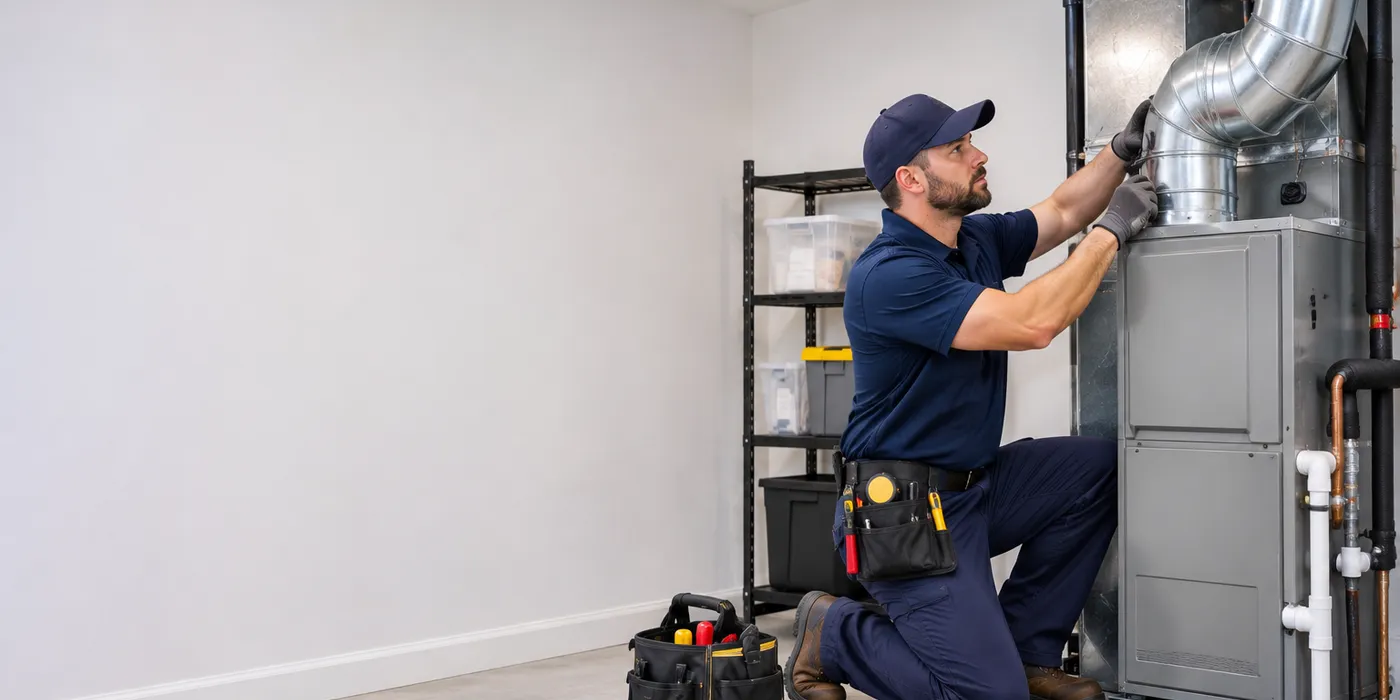
At the survey, we read the model and serial information on the condenser and air handler, inspect the evaporator coil, trace the refrigerant line set, and check the disconnect, breaker, drain trap, and duct connections. We measure supply and return airflow conditions, inspect the return grille and filter location, and look for crushed insulation or corrosion at the copper lines. A site survey commonly takes about 15 to 30 minutes, although a concealed air handler, attic ductwork, or a difficult line route can require more time. Before charging a new split system, we pressure-test the refrigerant circuit with nitrogen, evacuate it below 500 microns, and charge it to the manufacturer’s specifications.
When the selected equipment, line set, electrical service, and access are straightforward, we usually complete the removal, pad work, connections, testing, and startup during the installation visit; many standard replacements take roughly 4 to 8 hours on site. New duct runs, a replacement electrical circuit, structural access work, or equipment that must be ordered are scheduled as separate work. We finish by checking thermostat operation, condensate flow, temperature change at the registers, and the outdoor unit cycle.
Line set, ductwork, panel
The existing line set has a major effect on the installation scope. We check its diameter, length, insulation, joints, and route through walls or attic space because a damaged, undersized, inaccessible, or incompatible copper line may need replacement. Easy access to the condenser pad, closet air handler, attic platform, and electrical disconnect keeps the work more direct than equipment located behind a locked gate, above finished ceilings, or on a roof.
Ductwork and electrical components can also change what the job requires. A return that is too small, a corroded drain connection, a seized disconnect, or a breaker panel without suitable capacity can add work beyond setting the new equipment. If the selected system has to be ordered, or if a permit and inspection sign-off are required for the property, we include those steps in the installation plan before work begins.
Model plate and condenser access
Before we speak, we ask for the model number from the rating plate on the outdoor condenser or indoor air handler if it can be read safely. We also need to know which rooms are not cooling, where the thermostat is located, and whether the system is running, humming, clicking, or completely silent. A photo of the condenser, disconnect, line set, and air-handler closet helps us see the equipment layout before the visit. We ask about gate access, stairs, attic entry, pets, and any remodeling near the ductwork or electrical panel. Call Cold Air Conditioning Austin at (737) 139-2031 before a failed system leaves indoor rooms hotter and more humid as the cooling equipment remains out of service.
Hours of operation
| Monday | Open 24 hours |
| Tuesday | Open 24 hours |
| Wednesday | Open 24 hours |
| Thursday | Open 24 hours |
| Friday | Open 24 hours |
| Saturday | Open 24 hours |
| Sunday | Open 24 hours |
Not what you were after? Go back to the home page or drain line cleaning.