
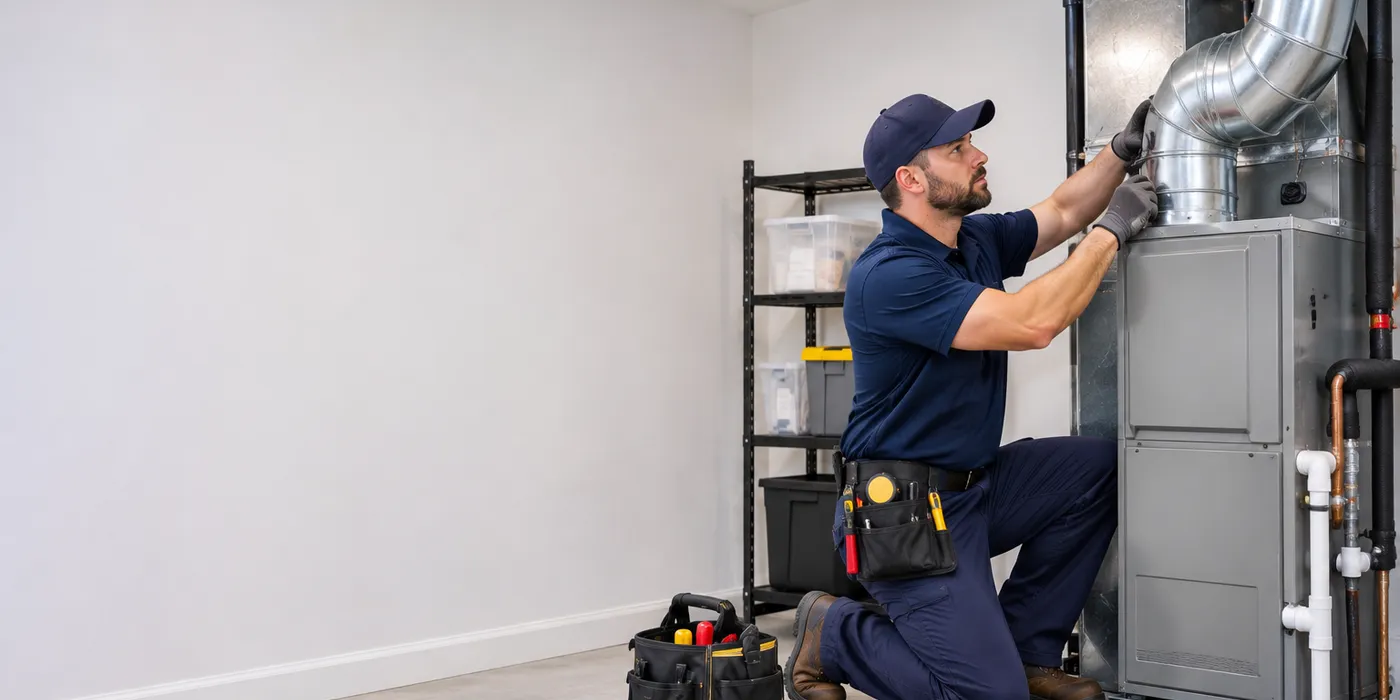
Dehumidifier Installation in Austin, TX
Dehumidifier installation for damp rooms, wet windows, and persistent indoor humidity.
In Austin, Rollingwood, West Lake Hills, and Lost Creek, dehumidifier installation often comes up in homes with older return ducts, vented crawl spaces, utility closets, or additions that stay damp after the thermostat has been satisfied. Humid outdoor air can enter through duct joints, attic penetrations, and gaps around plumbing lines, while bathrooms, laundry rooms, and closed closets can hold moisture long after a shower or wash cycle. We look at the rooms where the dampness starts and the route a drain line or duct connection would need to take.
A properly selected dehumidifier removes water vapor from the indoor air and sends collected condensate to a drain, pump, or reservoir arrangement. It can be a stand-alone unit serving one room or a whole-home unit connected to ductwork, depending on the moisture source and the layout of the house. This is generally planned work, but persistent humidity should not be left for months: wet drywall, wood trim, insulation, and closet contents can keep absorbing moisture while the underlying condition continues.
Damp rooms and wet windows
We often hear that a bedroom feels clammy even when the air conditioner is running, that water is forming on window glass, or that a bathroom mirror stays wet long after the fan has stopped. A musty smell in a closet, damp towels that do not dry, and condensation around supply registers are also useful descriptions when you call. If a portable unit is already in place, tell us whether its bucket fills quickly, whether it shuts off on a float switch, or whether water is appearing on the floor beside the cabinet.
Those symptoms can look alike from across a room, but they do not necessarily come from the same component. A unit may be too small for the room, a condensate pump may not be moving water, a drain route may be blocked, or humid air may be entering through a duct or building opening. We inspect the equipment and the surrounding surfaces before separating a simple connection issue from work involving ducts, drainage, or electrical supply.
Dehumidifier site survey
During a site survey, we use a humidity meter to compare conditions in the affected room with nearby spaces and, where relevant, the return-air path. Indoor relative humidity is often kept in the range of 45% to 55%, although the right setting depends on the home, occupancy, and outdoor weather. We inspect the air handler area, accessible duct connections, existing drain piping, floor drain, utility sink, outlet location, and the clearance around the proposed cabinet.
We also read the model plate when an existing unit is being replaced, measure the available opening and drain route, and check whether condensate can run by gravity or needs a pump. A basic survey commonly takes 30 to 60 minutes. When the unit, connection method, and access are already settled, we can often complete placement, drain tubing, and startup work on the same visit; duct alterations, a new electrical circuit, concealed drain routing, or an ordered model are normally arranged for a later installation visit. If cracked drain tubing, a failed condensate pump, or an unsuitable trap is found, we explain the replacement needed before that work is done.
Drain route, duct access, circuit
The drainage route is a major part of an installation. A cabinet located near a suitable drain or utility sink generally involves less routing than a unit whose condensate line must cross a finished room, pass through a wall, or use a pump to reach a higher connection. Tight utility closets, attic platforms, crawl spaces, and blocked access panels can also add labor because the cabinet, tubing, and tools have to be brought in and serviced safely.
Duct access and electrical supply can change the scope as well. A whole-home dehumidifier may need transitions at the return or supply duct, while a room unit may need a properly located outlet and space for its drain hose. A model that has to be ordered, an existing drain component that needs replacement, or electrical work that requires local approval can move the final cost upward from a straightforward accessible installation. We identify those conditions at the property so the work reflects the actual cabinet, drain path, and connections involved.
Model plate and drain route
Before calling, check whether there is already a dehumidifier in the home and look for its model plate on the side, back, or inside the cabinet panel. Let us know which room feels dampest, whether the unit is portable or connected to ductwork, and where water is currently collecting. If you can see the drain hose, pump, utility sink, or floor drain, describe where it runs and whether the route is open or behind finished walls. It also helps to mention stairs, attic access, crawl-space access, or a narrow utility closet around the proposed location. Call Cold Air Conditioning Austin at (737) 139-2031 before recurring condensation keeps wetting the window frames, drywall, and wood trim.
Hours of operation
| Monday | Open 24 hours |
| Tuesday | Open 24 hours |
| Wednesday | Open 24 hours |
| Thursday | Open 24 hours |
| Friday | Open 24 hours |
| Saturday | Open 24 hours |
| Sunday | Open 24 hours |
Not what you were after? Go back to the home page or get in touch.