
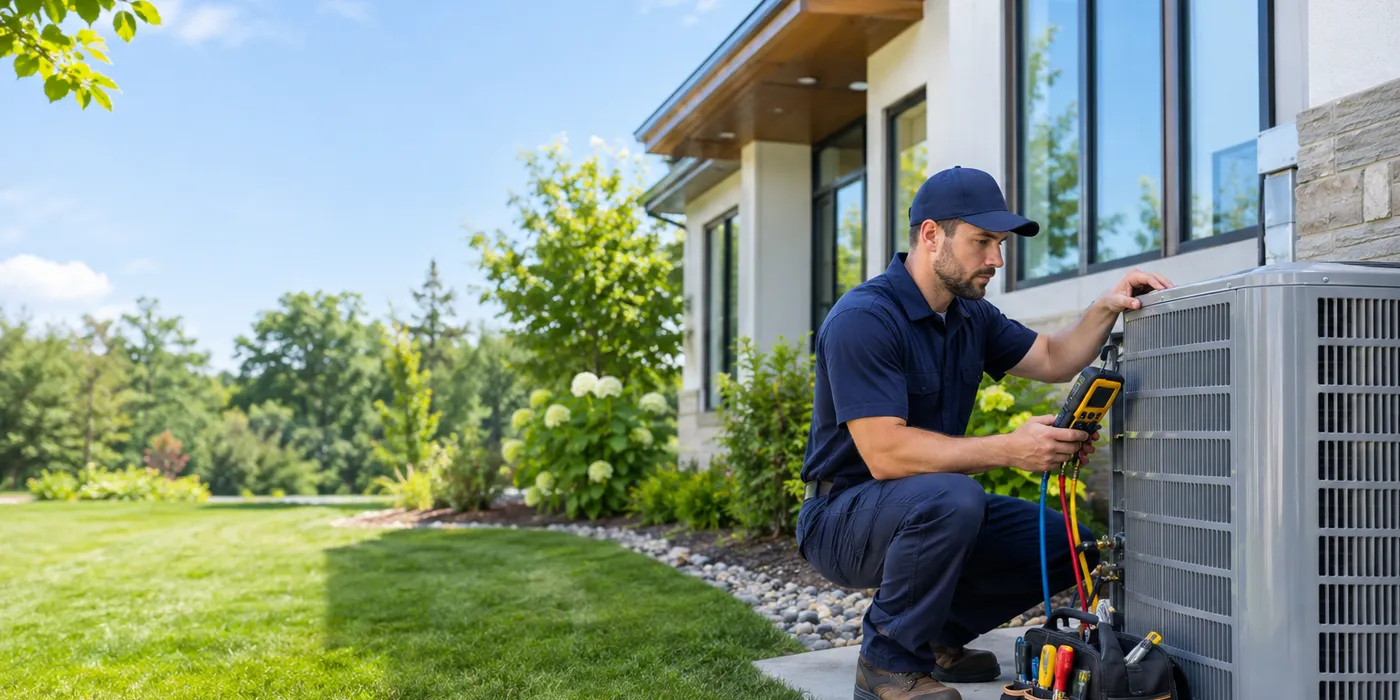
Heat Pump Installation in Austin, TX
Heat pump installation with checks for ductwork, line sets, and electrical service.
Most people start with the thermostat, a new filter, and a check of the breaker when the house feels warmer than it should. That is a sensible first step. A thermostat set to the wrong mode, a clogged return filter, or a tripped disconnect can stop a heat pump from moving air without meaning the equipment itself needs replacement.
Those checks have a limit when the outdoor unit is aging, the compressor is struggling, the refrigerant line set is damaged, or the ductwork cannot carry enough conditioned air to the rooms. We look at the indoor air handler, outdoor cabinet, electrical connection, refrigerant piping, drain connection, and the layout of the home before recommending a heat pump installation.
Installation planning can usually wait when the current system is operating safely and holding temperature, because the equipment size and duct route need to be checked properly. It should not be put off when the existing heat pump has stopped heating or cooling, trips the breaker, or leaves an occupied room without temperature control, since a failed outdoor unit can leave the home without either mode.
Heat won't come on
“The heat won't come on” and “the air is blowing but it is not warm” are common calls when a heat pump is no longer switching into heating mode. A thermostat problem, a failed reversing valve, a control-board fault, a low refrigerant charge, or an aging compressor can all produce similar air at the supply register.
“The outside unit keeps turning on and off” can point to a compressor that is overheating, a restricted coil, a failing capacitor, an electrical problem, or a system that is not matched to the duct load. Short cycling can also leave bedrooms warm in summer and cool in winter because the equipment shuts down before it completes a full cycle.
“One room is always hotter than the rest” often involves a supply duct, return-air path, insulation gap, or undersized equipment rather than the thermostat on the wall. “The unit is making a loud buzzing sound” may come from the contactor, fan motor, compressor, or loose cabinet panel.
These symptoms can overlap at the thermostat and register, but they do not lead to the same repair or installation work. We inspect the components and measurements behind the complaint so the equipment choice and scope match the actual fault rather than the sound or temperature alone.
Heat pump site survey
We begin a heat pump installation visit by identifying the existing indoor and outdoor equipment, reading the model plate, and checking the breaker, disconnect, thermostat wiring, condensate drain, line-set route, and return-air openings. We measure the home’s conditioned areas, ceiling heights, supply registers, return grilles, and accessible duct sections instead of selecting a replacement solely by the size of the old cabinet.
A site survey commonly takes about 45 to 90 minutes, depending on crawlspace access, attic access, duct layout, and electrical-panel location. We check the line set for visible kinks, corrosion, unsupported sections, and fitting sizes; many residential systems use copper tubing with a smaller liquid line and a larger suction line, but the required dimensions depend on the matched indoor and outdoor equipment.
When the existing pad, disconnect, wiring, drain route, duct connections, and refrigerant piping are suitable, an equipment change-out is commonly completed as one installation visit. A new electrical circuit, panel work, major duct alterations, a long line-set route, or equipment that must be ordered is normally planned separately so the correct materials and any required inspection steps are in place before installation.
Ductwork, line set, electrical panel
The condition of the ductwork changes the scope of a heat pump installation. Leaking attic ducts, crushed flex duct, an undersized return, or rooms served by long branch runs can require duct repairs or redesign before a new air handler can deliver the capacity it is selected for. A straightforward equipment location with accessible plenums is different from a system hidden behind finished walls or a tight attic hatch.
The refrigerant line set also affects the work. We check whether the existing copper route is compatible with the selected heat pump, whether insulation is intact, and whether the lines can be cleaned and reused or need replacement. A line set that crosses a finished ceiling, runs through a crawlspace, or has inaccessible joints usually adds labor and materials compared with an exposed route beside the outdoor wall.
Electrical service is another deciding factor. An older panel, a full breaker space, a deteriorated disconnect, or wiring that does not match the new equipment may require electrical work before the heat pump can be connected. Equipment availability, site access for the outdoor unit, and any permit or sign-off required for the address can also move the final scope; a unit that must be ordered or a panel that needs correction generally sits at the more involved end of the job.
Model number and panel
Before calling, look for the model number on the metal data plate of the outdoor heat-pump cabinet and, if accessible, on the indoor air handler or furnace cabinet. The plate is usually on a side panel near the electrical connection, and a clear photo can help us identify the existing equipment type and refrigerant requirements.
Tell us which rooms are not holding temperature and whether the outdoor unit, indoor blower, or thermostat is running now. It also helps to describe the route to the attic, crawlspace, electrical panel, and outdoor pad, especially if a gate, stairway, finished ceiling, or narrow side yard affects access.
If you know when the current system was installed, share that age along with any recent breaker trips, ice on the refrigerant line, or water near the indoor cabinet. Call Cold Air Conditioning Austin at (737) 139-2031 before a failing heat pump stops cycling altogether, since that can leave the home without both cooling and heating.
Hours of operation
| Monday | Open 24 hours |
| Tuesday | Open 24 hours |
| Wednesday | Open 24 hours |
| Thursday | Open 24 hours |
| Friday | Open 24 hours |
| Saturday | Open 24 hours |
| Sunday | Open 24 hours |
Not what you were after? Go back to the home page or air purifier installation.